

Uncategorized
What Is a Foundation Primer and What Is It Used For? Complete Makeup Primer Guide
Aug
If you have ever wondered what is a foundation primer and what is it used for, the simplest answer is that primer is a makeup-preparation product generally applied after skincare and before foundation. It can help create a smoother-looking surface, improve how foundation applies, address concerns such as excess shine or visible texture depending on the formula, and sometimes help makeup maintain its appearance for longer.
At Prestige Gleam, we believe understanding how each product fits into your routine is just as important as choosing the products themselves. You can explore beauty products, makeup accessories, organizers, and other essentials at Prestige Gleam.
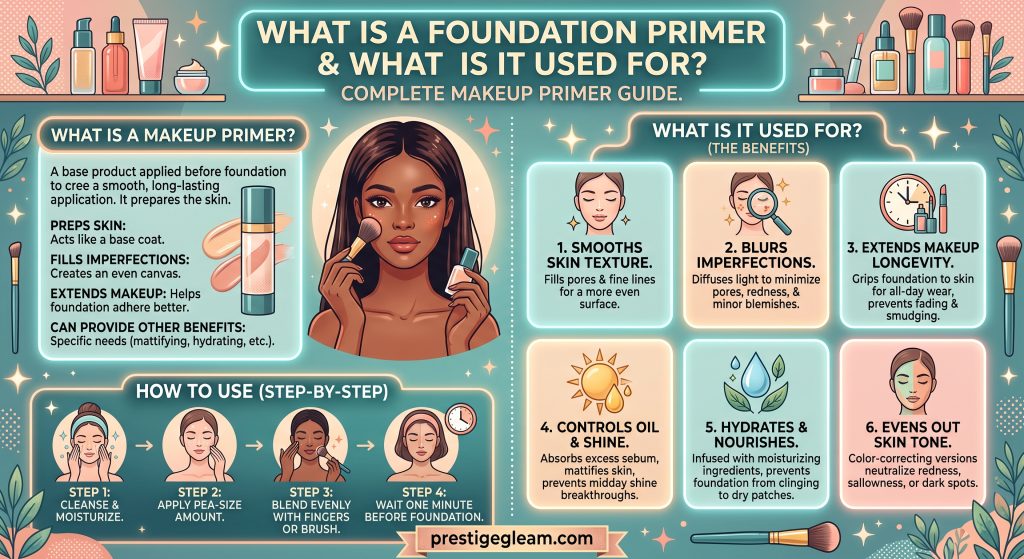
What Does Primer Do for Makeup?
So, what does primer do for makeup? Think of face primer as the preparation layer between skincare and complexion makeup.
Depending on its formulation, primer may help:
- Create a smoother-looking base
- Improve foundation application
- Reduce the appearance of uneven texture
- Control the appearance of excess shine
- Add hydration to dry-looking skin
- Blur the appearance of pores
- Help makeup wear more evenly
- Give foundation something more uniform to sit over
The exact result depends heavily on the formula. A mattifying primer behaves differently from a hydrating or illuminating primer.
The FDA recognizes makeup and facial makeup preparations as cosmetics under U.S. law. The agency also specifically notes that primers intended to make signs of aging less noticeable simply by concealing their appearance are cosmetics.
Primer for What? Understanding Its Purpose
If you’re asking primer for what, its main cosmetic purpose is preparation.
Foundation is designed primarily to even the appearance of your complexion. Primer prepares the surface underneath it.
A useful way to remember the difference is:
Skincare prepares your skin → primer prepares for makeup → foundation creates your complexion base.
Primer doesn’t necessarily replace moisturizer, sunscreen, foundation, or skincare. Instead, it can provide an additional makeup-preparation step.
What Does a Primer Do?
What does a primer do will depend on which primer you purchase.
Hydrating Primer
Designed for skin that tends to look dry or dehydrated. It can help foundation appear smoother rather than emphasizing dry-looking areas.
Mattifying Primer
Designed for people concerned about visible oiliness and shine, particularly around the forehead, nose, and chin.
Blurring Primer
Designed to temporarily soften the appearance of pores and uneven surface texture.
Illuminating Primer
Creates a more radiant-looking base underneath foundation.
Gripping Primer
Designed to create a slightly tacky base that helps complexion products adhere.
Color-Correcting Primer
Uses color theory to visually balance certain areas of discoloration before foundation is applied.
The best choice therefore depends on what you want your primer to accomplish.
What Is Primer Used For?
What is primer used for in a normal makeup routine?
Its most common role is creating a more even canvas before complexion makeup. Some people use it across their entire face, while others apply different primers strategically.
For example, someone with an oily T-zone and dry cheeks might use a mattifying formula around the nose and forehead while applying a hydrating formula to drier areas.
You don’t necessarily need to cover your entire face with the same product.
What Is the Purpose of Makeup Primer?
The purpose of makeup primer is primarily cosmetic. It can change the way makeup looks and applies rather than permanently changing the skin itself.
This distinction matters.
The FDA explains that products intended merely to make lines or signs of aging less noticeable by hiding them can qualify as cosmetics, while products claiming to affect the structure or function of the skin may fall into a different regulatory category.
Therefore, realistic primer expectations include smoother-looking makeup, temporary blurring, shine control, hydration or radiance depending on the formulation.
What Does a Primer Do to Your Face?
A primer forms a thin cosmetic layer over the skin.
Depending on its ingredients and formulation, what a primer does to your face may include temporarily smoothing its appearance, reducing visible shine, adding radiance or making pores appear less prominent.
However, primer shouldn’t be treated as a permanent treatment for pores, wrinkles, acne, or other skin concerns unless the particular product is legally marketed for an additional therapeutic purpose.
What Does Face Primer Makeup Do?
Face primer makeup creates a transition between skincare and your complexion products.
Imagine painting on a surface that has different textures. Preparing that surface first can make the final layer appear more uniform. Makeup primer works on a similar cosmetic principle, although your skin obviously isn’t a wall or canvas.
The result can be especially useful when applying:
- Liquid foundation
- Cream foundation
- Concealer
- Tinted complexion products
- Powder foundation
The formula you choose should complement both your skin and foundation.
How Does Makeup Primer Work?
Different primers work differently.
A smoothing formula may create a more even-feeling cosmetic film over the skin. A mattifying product may help absorb or manage visible oil. Hydrating formulas add moisture or ingredients that help the surface feel more comfortable, while illuminating products contain ingredients that reflect light.
This is why there isn’t one universal answer to how does makeup primer work. The mechanism depends on its ingredients and intended cosmetic effect.
Is Primer Makeup Necessary?
No. Primer makeup is not necessary for everyone.
You can create beautiful makeup without it.
Primer becomes particularly useful when you have a specific problem you’re trying to solve, such as foundation emphasizing texture, makeup becoming shiny quickly, dry-looking foundation, or wanting a particular luminous finish.
If your skincare and foundation already work beautifully together, you may decide that an additional primer isn’t necessary.
Do I Need Primer Makeup?
Ask yourself three questions:
- Does my foundation already apply smoothly?
- Does my makeup maintain the appearance I want throughout the day?
- Is there a particular concern I want another product to address?
If you’re satisfied without primer, you don’t need to add one simply because it’s a common step.
If you consistently experience visible dryness, shine, texture, or uneven foundation application, experimenting with an appropriate primer may be worthwhile.
Primer Before Foundation: Which Comes First?
Primer goes before foundation.
A typical daytime sequence is:
Cleanser → skincare → sunscreen → primer → foundation → concealer → remaining makeup
If you’re using sunscreen, allow it to settle according to its directions before proceeding with makeup. A makeup product marketed with SPF can also have additional regulatory requirements in the United States because sunscreen products are regulated as drugs.
How to Put On Primer
Knowing how to put on primer correctly is simple.
Start with clean skin and complete your normal skincare routine. During the day, apply sunscreen according to its directions. Once those products have settled, use a small amount of primer.
Apply it where you actually need it rather than automatically using a heavy layer across the entire face.
Gently blend it using clean fingers, a brush, or another applicator recommended by the manufacturer.
Then allow the product to settle before applying foundation.
How to Use Face Primer
When learning how to use face primer, avoid assuming that more product will produce better results.
Too much primer can sometimes contribute to pilling, uneven application, or excessive product buildup.
Instead:
- Begin with a small amount.
- Concentrate it on problem areas.
- Blend a thin layer.
- Allow it to settle.
- Apply foundation gradually.
Always follow the specific directions on your primer because formulations vary.
The FDA’s cosmetic safety guidance recommends reading cosmetic labels, following directions and warnings, washing your hands before application, keeping containers clean, and avoiding sharing makeup.
Applying Makeup Primer With Your Fingers vs. a Brush
Both approaches can work.
Clean fingers are convenient because their warmth can help distribute some primer formulas into a thin layer. Brushes may be useful when you prefer not to touch your face or want more controlled placement.
Regardless of the method, cleanliness matters. The FDA notes that consumer handling can introduce microorganisms into cosmetic products and recommends washing hands before applying cosmetics and keeping containers clean.
How to Apply Foundation Primer
For a simple foundation primer routine:
Step 1: Complete skincare.
Step 2: Apply daytime sunscreen when appropriate.
Step 3: Allow your skincare products to settle.
Step 4: Apply a small quantity of primer.
Step 5: Concentrate on areas where you need its effect.
Step 6: Blend into a thin, even layer.
Step 7: Let the primer settle according to the product instructions.
Step 8: Apply foundation.
Avoid aggressively rubbing foundation over the primer. Gentle blending, pressing, or stippling can help preserve the prepared base.
Define Primer Makeup
A simple way to define primer makeup is:
Makeup primer is a cosmetic preparation product typically applied after skincare and before complexion makeup to create a desired surface or finish for subsequent makeup application.
It isn’t automatically skincare, and it isn’t a replacement for foundation.
Its purpose is preparation.
Which Primer Should You Choose?
Choose primer according to your needs rather than trends.
For dry-looking skin, consider a hydrating primer.
For oily-looking skin, consider a mattifying primer.
For visible pores or texture, consider a blurring or smoothing primer.
For a radiant finish, consider an illuminating primer.
For makeup that tends to shift, consider a gripping primer designed to work with your complexion products.
You should also consider compatibility between your primer, skincare, sunscreen, and foundation because layering several formulas can occasionally cause pilling or separation.
Can You Wear Primer Without Foundation?
Yes.
Primer doesn’t have to be followed by foundation. Some people use a blurring, mattifying, or illuminating primer by itself when they want a more polished appearance without full complexion makeup.
For example, a blurring primer may temporarily soften the appearance of pores, while an illuminating formula may give bare skin a more radiant finish.
Common Foundation Primer Mistakes
Several mistakes can prevent primer from performing well:
- Applying too much
- Not allowing skincare to settle
- Choosing the wrong formula for your needs
- Rubbing foundation aggressively over primer
- Using products that don’t layer well together
- Applying primer to dirty skin
- Ignoring manufacturer directions
Experimenting with smaller amounts is often the easiest way to troubleshoot application problems.
Is Makeup Primer Safe?
Cosmetics marketed in the United States must be safe when used as directed or under customary conditions of use. Most cosmetics don’t undergo FDA premarket approval, although color additives have specific approval requirements, and manufacturers are responsible for product safety.
Read the product label and ingredient list, particularly if you know you’re sensitive to certain ingredients. Stop using a cosmetic if you experience an unexpected reaction and seek appropriate medical advice when needed. The FDA also provides a system for reporting cosmetic-related adverse events.
For readers who want to explore scientific literature about cosmetic formulations, dermatology, skin barrier research, and cosmetic ingredients, PubMed provides access to biomedical research from the National Library of Medicine.
Where to Buy Makeup and Beauty Essentials in the USA
Once you’ve perfected your primer and foundation routine, good organization makes it much easier to find your everyday products.
At Prestige Gleam, beauty shoppers can explore makeup products, beauty accessories, cosmetic organizers, storage solutions, and other essentials for creating an organized beauty routine.
Keeping primer, foundation, brushes, sponges, and frequently used cosmetics together can also make morning makeup routines faster and reduce unnecessary clutter.
Frequently Asked Questions
What does primer do for makeup?
Primer prepares the surface before foundation. Depending on the formula, it may create a smoother-looking base, reduce visible shine, add hydration or radiance, blur the appearance of pores, or improve how makeup applies.
What is primer used for?
Primer is primarily used between skincare and foundation to prepare the complexion for makeup.
Is primer makeup necessary?
No. Primer is optional. It is most useful when you have a particular makeup concern that an appropriate primer can address.
Do I put primer before foundation?
Yes. In a conventional makeup routine, primer is applied after skincare and before foundation.
How much face primer should I use?
Start with a small amount and add more only if necessary. The manufacturer’s directions should take priority because formulas differ.
Can I use face primer every day?
Many primers are designed for regular cosmetic use. Follow the label instructions and discontinue use if the product causes irritation or another unexpected reaction.
What is the purpose of a primer?
Its primary purpose is to prepare the complexion for makeup and create the desired cosmetic finish before foundation.
Final Thoughts
Understanding what a foundation primer is and what it is used for makes it much easier to decide whether primer belongs in your beauty routine. Primer is an optional preparation step applied before foundation. Depending on the formula, it can help create a smoother-looking surface, control visible shine, provide hydration or radiance, blur the appearance of texture, and improve foundation application.
The key is choosing primer for a specific reason rather than assuming everyone needs one. Match the formula to your skin, foundation, and desired finish, apply a thin layer, and give it time to settle before moving on to complexion makeup.
Explore beauty essentials, makeup accessories, and organization solutions at Prestige Gleam.
